
Stage 6 Gold
Gold. Six strokes over 400 metres.
An independent guide by Singapore Swimming Academy, which teaches SwimSafer. SportSG runs the programme.
Find a classSwimSafer Gold is Stage 6 of 6 in Singapore's national water safety programme, and the final of the three named certificates (Bronze, Silver, Gold).
Official demonstration SwimSafer 2.0 Gold, SportSG
To pass
- Practical assessment: every skill shown, 100% competent.
- Online theory test: 90% needed, passed within seven days after the practical.
The e-certificate is issued on CAMS (the online results system) once both are passed.
Assessment day, results and re-attemptsWhat to wear
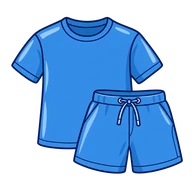
Assessed in swimwear, long pants and t-shirt.
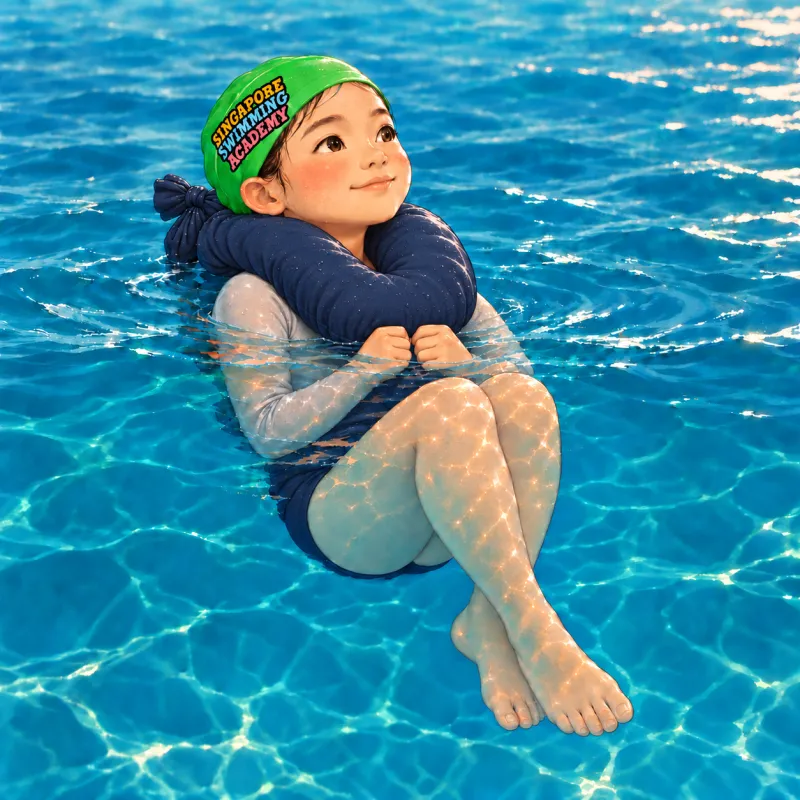
A key skill is converting wet pants into a self-made float.
It tests stamina and resourcefulness while weighed down by heavy, wet clothing.
Used in the survival skills
- Swimwear
- T-shirt
- Long pants
- No goggles
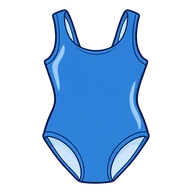
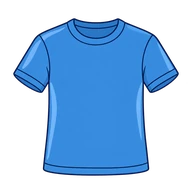


Practical assessment
It has a swim and the survival sequences below. The sequences are done in the order shown.
Swim (use standing dive entry for front crawl, breaststroke)
- 100m front crawl (within 3:00 min)
- 100m breaststroke (within 4:00 min)
- 100m backstroke (within 3:20 min)
- 50m survival backstroke
- 50m sidestroke
- 15m butterfly
Gold sequence
Clothed: swimwear, long pants and t-shirt. No goggles.
- Step 1 of 9 Compact jump into deep water.
- Step 2 of 9 Head-first surface dive to at least 1.8m, clearing the ears if needed.
- Step 3 of 9 Swim 5m through hoops on the pool bottom and come up.
- Step 4 of 9 Swim 45m fast, front crawl.
- Step 5 of 9 Swim a further 50m slowly with any survival stroke, face clear of the water.
- Step 6 of 9 Take off the long pants in deep water and make a float from them while treading water, within 5 minutes.
- Step 7 of 9 Hold the H.E.L.P. (a curled-up floating position) position with that float for 1 minute.
- Step 8 of 9 Swim 25m with the float.
- Step 9 of 9 Climb out.
End of Gold sequence
Based on the SwimSafer 2.0 Instructor's Manual, Sport Singapore, 5th edition (July 2025).
The full skill list by category is below.
Full skill list by category
Show the full skill list by category (reference)
Advanced Personal Survival & Swimming Skill Proficiency
Gold (Stage 6) is the final stage of SwimSafer. Students swim six strokes over 400 metres, with front crawl, breaststroke and backstroke timed, and complete advanced survival skills in deep water.
Entries & Exits
- Standing dive.
Sculling & Body Orientation
- Scull, float or tread whilst making a self-made float within 5 min.
Underwater Skills
- In at least 1.8m deep water, perform head-first surface dive (tuck or pike) and perform ear equalisation if necessary.
- Swim through hoops on pool bottom for 5m.
Movement / Swimming / Strokes
- 100m front crawl within 3:00 min.
- 100m breaststroke within 4:00 min.
- 100m backstroke within 3:20 min.
- 50m survival backstroke.
- 50m sidestroke.
- 15m butterfly.
Survival & Activity Skills
- Clothed in swimwear, long pants and t-shirt: compact jump entry.
- Headfirst surface dive to 1.8m depth.
- Swim through underwater hoops for 5m.
- 45m front-crawl sprint.
- 50m slow survival stroke.
- Remove and float with pants within 5 minutes.
- Demonstrate H.E.L.P. (a curled-up floating position) (Heat Escape Lessening Posture) for 1 minute with the self-made float.
- Swim 25m with self-made float before exiting.
Knowledge
- Principles of Personal Safety and Survival.
- Environmental Awareness.
- Health Awareness.
- Emergency Situations and Survival Techniques.
- Rescues.